OutRun 2 Heart Attack Mode Guide
Earn hearts for Clarissa across branching OutRun stages.
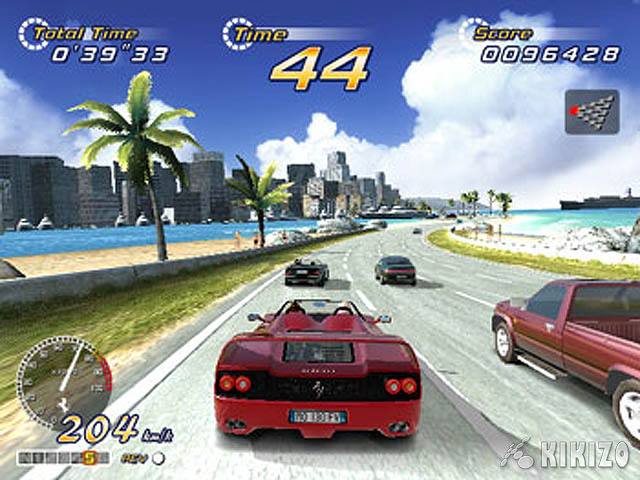
Heart Attack is OutRun 2’s personality mode. You still drive the branching fifteen-stage map toward one of five Goals, but passenger Clarissa turns the cruise into a stunt checklist. Inside marked Start–End zones she asks for specific driving feats. Nail them to earn hearts; botch them and you may lose hearts or miss the grade you wanted. The mode launched with Sega AM2’s arcade game and remains a highlight of the Xbox port and later Coast 2 Coast releases.
If you are brand new to controls and forks, skim Getting Started first. Heart Attack assumes you can already initiate a drift and finish a route without staring at the stick. Drift requests especially lean on the skills in How to Drift. Challenge players who bounce between mission cards and Heart Attack practice will also want Challenge Missions and the unlock notes on Codes.
How a Heart Attack run works
Select Heart Attack, pick your Ferrari and transmission, and start from the familiar opening stretch. Gameplay still uses the timer and fork choices of OutRun Arcade: left forks tend to be easier, right forks harder. Layered on top are Clarissa’s prompts. When you enter a request zone, the game tells you what she wants before you reach the End marker. Your job is to perform that stunt cleanly inside the window while still driving toward a Goal.
Hearts are the score currency of the mode. Successful requests add hearts; mistakes can subtract them or simply waste the zone. At the end of a run, your heart total and performance feed into grading and the tone of the ending you receive. Think of it as a romance meter powered by driving theater.
Common request types
Exact wording varies by version and localization, but the verbs repeat across arcade and console:
Drift requests. Slide through the zone with a committed drift. This is where brake-and-gas or Manual gear drifts matter. A timid yaw may not count; a controlled showy slide usually does. Do not keep sliding forever after the End marker—recover and protect the race timer.
Pass cars. Overtake a target number of traffic cars inside the window. Plan your line early, use the whole road, and avoid clipping cars so hard that you spin and fail the rest of the request.
Lane / road-position requests. Stay in a stated lane or colored path, or weave as instructed. Smooth steering beats last-second swerves that bounce you off barriers.
Cone or object challenges. Navigate cones or flagged objects without hitting them. Treat these like precision mini-stages; scrub a little speed if needed rather than collecting every cone with the bumper.
No-crash / clean driving. Survive the zone without accidents. Traffic, walls, and panic corrections are the enemies. If a drift request and a clean-driving mindset collide, prioritize the prompt—but reset your composure the moment the zone ends.
You will also see combinations and harder variants as routes get serious. Read the prompt immediately at Start; hesitation eats half the window.
Special Requests
Special Requests are higher-drama prompts that ask for flashier or stricter performances than the basic set. They are the difference between a polite clap and a memorable Heart Attack story. Because they are stricter, they punish the same sins as hard Arcade stages: late reactions, oversliding into walls, and traffic negligence.
Approach Special Requests with a pre-planned tool. If the special is drift-heavy, set up with the initiation you trust most (brake drift on Automatic, gear drift on Manual). If it is passing-heavy, enter the zone already aligned for overtakes instead of discovering traffic late. Missing a Special Request hurts more than missing a trivial lane nudge—budget focus accordingly.
Grading and romantic endings
Heart Attack is not only about reaching a Goal. Your heart count and how cleanly you satisfied Clarissa feed grading and the romantic ending flavor you unlock. Higher heart totals and successful Special Requests push you toward better grades and warmer ending scenes; weak performances still finish the map but feel like a polite handshake instead of a postcard romance.
Practical takeaway: do not ignore hearts just to greedy-rush a hard right fork you cannot drive yet. An easier left-fork route with strong request completion often teaches more and grades better than a failed hero run. Once request timing is comfortable, start mixing harder forks the same way you would in Arcade.
Transmission and car choice for Heart Attack
Automatic is fine while you learn what each prompt looks like. Manual shines when drift Specials need speed retention and you already trust gear initiations. Cars that feel stable mid-slide make cone and no-crash zones less stressful; twitchier cars can still excel if your corrections are tidy.
Whatever you pick, avoid swapping cars every failed zone. Heart Attack grades improve faster when the only variable is your reading of Clarissa’s requests. After a session, compare machines on the roster pages linked from the players hub and refine with drift practice.
Route strategy
Heart Attack uses the same branching philosophy as Arcade. Early on, take left forks so you can focus on request execution. When you can clear common drift, pass, lane, cone, and no-crash prompts without panic, push a right fork and notice how tighter geometry shrinks your reaction window.
If a request fails, do not tilt into the next zone. Breathe, straighten, and treat the following Start marker as a fresh exam. Timer management still matters—you can ace every flirtation and still see Game Over if you sightseeing through checkpoints.
Practice plan
- Run one easy Heart Attack route on Automatic with the sole goal of reading prompts early.
- Replay focusing only on drift zones; use techniques from How to Drift.
- Replay focusing on pass-car and no-crash zones.
- Attempt a run that prioritizes Special Requests even if you take safer forks.
- Compare grades and ending tone; adjust how aggressively you chase hearts versus hard paths.
- Mix Challenge mission practice so precision tasks transfer—see Challenge Missions.
Related unlocks and codes
Some console unlocks and gallery content sit behind Challenge progress or passwords rather than Heart Attack alone. When you are collecting cars, tracks, music, or cards, check Codes for Gallery passwords such as the well-known Xbox set, and use Challenge for legitimate card hunting. Heart Attack remains worth playing even after unlocks are complete because it is the best teacher of “drive well under instructions.”
Mindset
Clarissa is a coach with a smile. The mode trains situational driving: hit a verb inside a window, then return to race craft. Players who only ever play Arcade often panic the first time a drift is mandatory; players who only chase hearts sometimes forget the timer. Balance both.
Return to Getting Started for controls and first-hour structure, keep How to Drift open while you polish slides, push into Challenge Missions for Xbox depth, and keep Codes handy when you are ready to unlock the gallery. Earn the hearts—then earn the ending.
Frequently Asked Questions
Quick answers for OutRun 2 players.
What is Heart Attack mode in OutRun 2?
Heart Attack keeps the branching OutRun map but adds Clarissa’s stunt requests inside Start–End zones. You earn hearts by performing drifts, passes, lane tasks, cones, clean driving, and Special Requests.
What are Start–End zones?
Marked sections of track where a request is active. The prompt appears near the Start; you must complete the stunt before the End marker for full credit.
Do hearts affect the ending?
Yes. Heart totals and request success feed grading and the romantic ending tone. Stronger performances unlock warmer finales than bare route clears.
Should I take hard right forks in Heart Attack?
Learn prompts on easier left-fork routes first. Add harder right forks once you can finish drift, pass, and clean-driving requests without panicking.
Is Manual required for Heart Attack?
No. Automatic is fine for learning prompts. Manual helps when drift Specials reward speed-preserving gear initiations.